Dear Arturo,
I spoke to Lady Amrac about her time in the seventh borough. She believes that her encounter is proof that Afflians and Madnakhi can learn to put aside their griefs easily but I am not so sure. Neither group, nor any Geldoran now living, expects the other to lay aside their customs but many of those customs emerged during long generations of strife. It is not easy to disentangle one’s history from the bitterness that fueled it. They are both committed but it will take time.
As for your situation, there is little I can add. You know more examples of people overcoming enmity than I do. My advice to you is to remember those examples and share them. I am more prepared to speak to how divisions form. If that can help prevent division in the first place, I will happily share some of what I’ve read. There is no shortage of tales from their time in the wilderness.
You asked about when my account of your visit will be done. All I can say is that it will take time. We still have much to rebuild and lately there has been no shortage of demands on my time. But I will keep you informed of my progress.
Hame wishes you well and Lady Amrac eagerly looks forward to having you visit. She has installed a stable for Kitalfa at the rear of the manor.
Humafalk and the Witch – A Madnakhi tale of the Afflians
Thirty years had passed since the Madnakhiye exiles settled in the dry hills which stood beside the mist wall. Humaqdad was patriarch. His family lived apart from their Affalakhiye neighbours but the two tribes lived in peace. He had a wife and her name was Amarati and she was of mixed blood. Her father had been of the Afflakhiye who joined the Madnakhiye when they met on the highland road in generations past.
Humaqdad named their son Humafalk saying, “There is much wisdom in the Afflakhiye.” And in this he spoke truly.
The mother Amarati and her house knew well the dangers of the mist and warned Humafalk against driving his flock within. One day her son went out to let the flock drink from the stream but the flock returned without him, and all wet, and one of their number was missing. Amarati knew that her son had followed one into the mist. When he returned not after a month she died from grief and her soul was welcomed on the mountain.
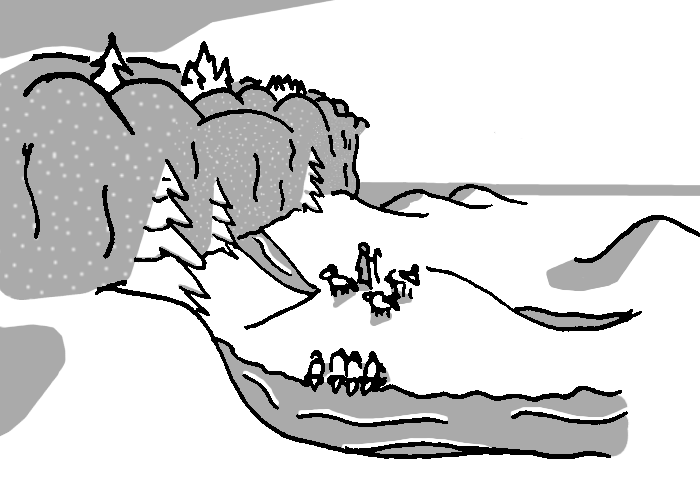
Eleven months later Humafalk did return and not alone. He came with a tribe of the Afflakhiye but these were not of the highland road but of the deep woods and had split from their kin. Humaqdad was overjoyed at the return of his son. He remarried to one of the daughters of the deep woods and her name was Motori. She bore him a son and he named him Mawatan saying, “The mists have returned my son and given me another.”
Twenty years passed and Humaqdad’s soul returned to the mountain and Humafalk inherited his father’s inheritance. Some of the Madnakhiye grumbled that a man whose blood was a fourth part Affalakhi should not become patriarch but Mawatan supported his brother saying, “Should I then replace my brother so that one of mere half blood should rule over you?” And the critics were silent.
Soon after, Humafalk consulted the elders and they agreed that it was time to face the mists together. The Afflakhiye of the deep woods promised a safe haven on the other side of the mists and an end to their long travels. Because Mawatan trusted them, so Humafalk trusted them also. The Afflakhiye of the highlands went also with their companions.
Motori, mother of Mawatan, offered to ward away the fog with her sorcery but Humafalk forbid it. She hid away her magic and led them through dark roads in the misty forest. Sheep and cattle were eaten by thorns and roots by day and by night prowlers snatched them off. Even so, the sundry tribes pressed on and met some good fortunes.
They camped by evening beside thick hedges and found the way clear by morning. They camped by evening away from slumbering beasts and found the beasts gone by morning. Though their good fortune was delightful to most, Humafalk grew wary of his stepmother and one night he found her gone from her tent. So the next night he tied her up in her tent and waited.
A spirit of ice and shadow visited her tent and whispered, “Motori! Motori my dearest friend! You did not come! May I not serve you tonight?”
Humafalk confronted him and said, “What is your bargain with Motori, spirit?”
The spirit said, “That I should serve her and deliver her and her kin to the grey city and claim the blood of the Madnakhiye. But as you have bound her I must claim your blood now.”
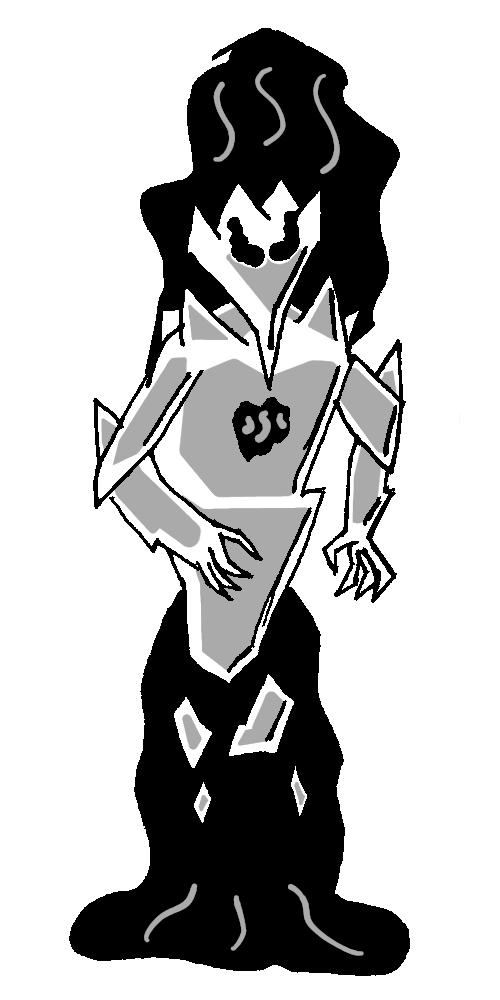
Humafalk wrestled with the spirit who was strong and cruel. Only when Mawatan arrived was Humafalk saved and the spirit driven away. Mawatan was angry to see how Humafalk had bound his mother without confiding in him but also saddened that Motori had betrayed them and he agreed that she should be banished the next morning.
Good fortune still went ahead of them on the misty road in days after. Humafalk was worried by this good fortune but Mawatan said, “It is because we drove the spirit off that it no longer lays traps for us.” For nearly a year they went on until they could see in the distance the light of the grey city piercing through the mists. The Madnakhiye and Afflakhiye of the highlands rejoiced but those of the deep woods were silent.
On the last day of their journey they went along the road and before them stood a spirit of ice and shadow much like that which came before but its face was altogether different. Instead it wore the face of Motori.
Humafalk said, “You come before us now without disguise! Stand aside lest my brother and I drive you hence, for we have no bargain with you!”
Motori said, “No, not with you, but with my son. Mawatan promised that I shall feast on Madnakhi blood at the end of your voyage and here you are! Afflakhiye shall go into the grey city but you shall end your travels here!”
Those of the deep woods cheered and those of the highlands were silent while the Madnakhiye trembled. But Mawatan stepped forward and said, “Leave them, Mother. I promised you the blood of the Madnakhiye in exchange for straightening our path. Now I offer you the promised blood, for the mountain’s blood runs also through my veins. Take your reward and leave my brother alone.”
Motori cried and howled and wept as she took Mawatan to slake her thirst and then she ran off into the deep woods and wept until she died of grief. The children of the mountain tried to comfort Humafalk but the Afflakhiye of both tribes turned on him and said, “Your people took us on this road and look what horrors it has brought. What kind of man makes a poor mother do such a thing? You should have offered yourself. Then her end would be less evil.” But it was never Humafalk’s bargain.
The two tribes of Afflakhiye left together to join their kin to the north. Humafalk grieved his dead brother and his people then followed him into the valley of the grey city. To this day Humafalk is called Awalhum because he alone of Affalakhi blood was wise, and Mawatan his called Awaltelet because he alone of Affalakhi blood was brave.
Clan Troahy Betrayed – An Afflian tale of the Madnakhi
The Troahy family of the Great Exodus came to the great valley in Year 1 of the Valley, which is reckoned Year 6 of the Valley by the children of the First Exodus and Year 1999 of the greyfolk’s reckoning. Like all who came along the woodland road, they brought with them great wealth and crafts from Affalach and much wisdom.
As it was with all the caravaners, when the Troahy family arrived in the valley they were detained by the greyfolk at once and quartered in Issodel. This was done for fear that we may have brought with us the shadow-god’s heart. Thus they proved that the lore of the gods was not lost in Geldorad as it was in Affalach and at first this pleased us.
“None shall leave Issodel without being searched,” their mayor decreed. “And none shall return to Issodel after he is released until the last visitor from afar has been cleared. Any who return to Issodel shall be held captive there once more until all is finished.”
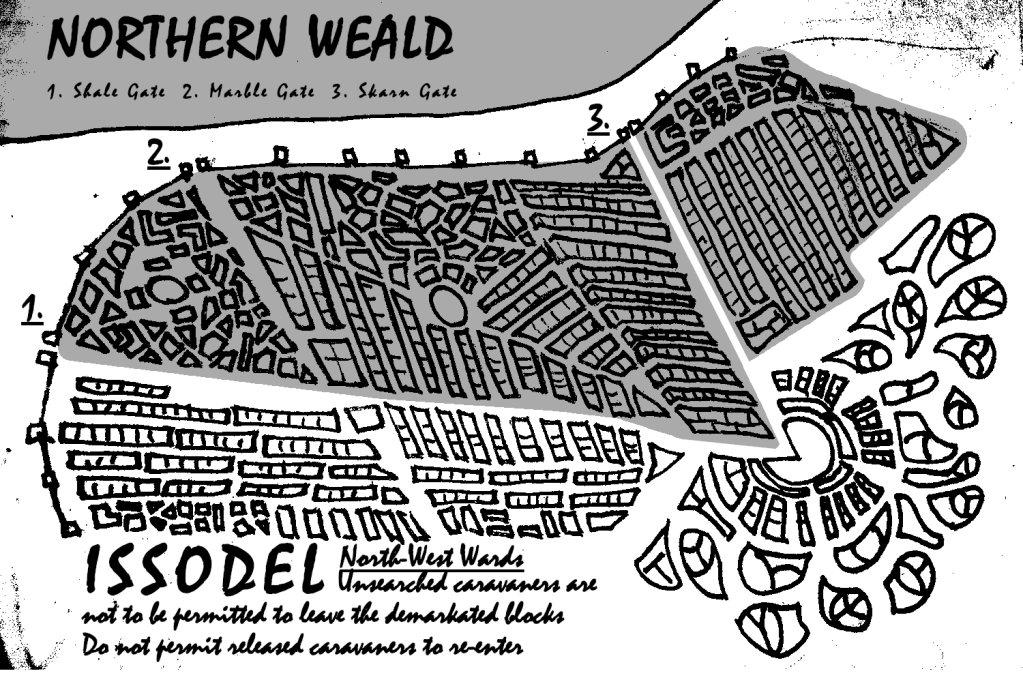
This seemed wise to us but the Geldorans were slow and cared not if families were sundered for weeks or months. And more arrived from the woods, even those who had travelled from the mountain city of Madnach. And because the russetfolk were fewer in number, so the Geldorans wished to search and release them first, even those that arrived after us.
So it was that Arila son of Deila was detained with Ecuati who was the daughter of a Madnian noble. This noble house had travelled with our sundered cousins who wandered the highlands. They knew Afflian customs and respect the Troahys’ manners. They ate with the Troahys but waited until the sprinkling was finished and they covered their feet.
Ecuati’s father flattered Deila saying, “Your fathers were surely great in Affalach to win such wealth as you now bring with you. And it is no small skill which kept your fine clothes intact on the dangerous road. Our flocks and coins were lost on the way. I have kept only this jewel, which was once the envy of our richest chiefs. I pray you will tell no one else of it.”
Deila said, “Good sir, hide that thing! If the Geldorans see it before your time to declare it they may take it or think that you have smuggled a shard of the shadow-god!”
“Is that so?” the russet noble asked. “Then I will keep it hidden until the day I am called. I want no trouble from our new hosts. I will tell them, as one who travelled with Afflians and Madnians together, that none of us would dare attempt anything so wicked and foolish as to bring a shard of the shadow-god.”
Deila’s son Arila was old enough to know love but too young to know wisdom and his heart went out for Ecuati who was very lovely. He told her his dreams of exploring this new home and he wished to take her with him. She never denied him but her agreement was always cool and she lacked his passion. She remained calm on the day her parents and siblings were called up to be searched, even though she was left behind. Ecuati’s father took all their possessions with them to be surrendered to the Geldorans until all was done, leaving her quite poor. Yet she was unmoved and remained proud and Arila loved her only more.
Her father was well loved by the Geldorans and he arranged for the Troahys to be searched before the rest of their people. Deila went to surrender his riches for a time and he and the rest of his house were searched and released, all except for Arila who had to remain a while longer. But he had Ecuati with him and his love for her grew.
A month passed and it was his time to be called up.
Standing before the jurists and lawmen he declared, “Good hosts, I declare that all I have with me of my father’s wealth is the clothes on my back and the contents of this sac.”
The jurists demanded, “Tell us what it is in the sac.”
Arila said, “Only blankets and spare clothes, a few coins and books, and a little bread.”
The lawmen took his sac and searched and inside they found Ecuati’s father’s gem. He had given it to her in secret and she had placed in Arila’s bag while he packed.
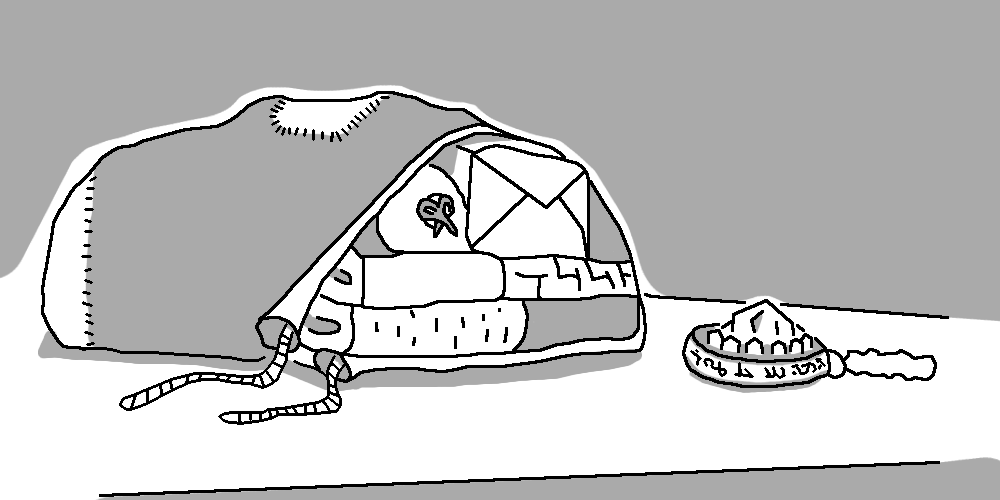
The jurist declared, “Who would forget to mention such a treasure or think to hide it unless he was the shadow-god’s disciple? Indeed, this may be the shard which we feared your kind would bring!”
“No!” said Arila. “Ask the Madnian noble! He will speak in my defence!”
The jurist said, “He has told us only that the Afflians are a deceptive and secretive race. Now we know this for truth. Your wealth and the wealth of your family shall be removed indefinitely and given into the Madnian’s keeping. And you shall not leave Issodel!”
As he was escorted back to his quarters he crossed paths with Ecuati who was on her way to face the jurists and lawmen. She would soon be free. Arila begged her to tell the truth and prove his innocence, if not for his sake than for the sake of her own soul.
She only answered, “Why should I defy my father now when it was for this that our ancestors left Madnach?”
Heartbroken Deila petitioned the jurists and he and his house returned to Issodel to be with his son. There they remained, poor but proud, for generations until the Ruckus ended the last vestige of their confinement. And it was no less than a descendant of Deila’s brother Daela who was Daelich, the Last Reeve of the Afflians.
 geldorad.ca
Leave a comment